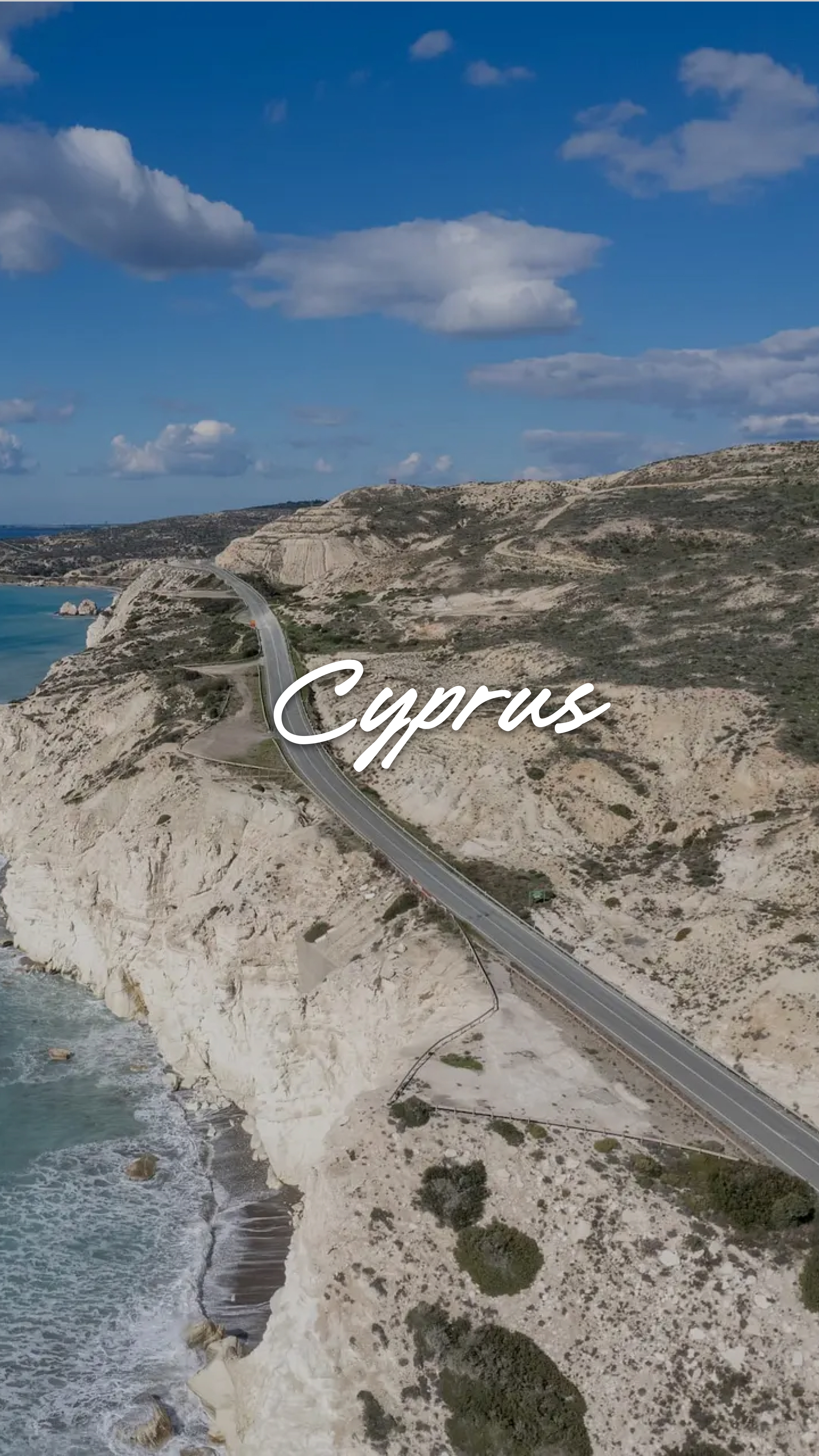
Cyprus features a range of terrain that attracts cyclists of all levels. The Troodos Mountains rise steeply from coastal roads, giving challenging climbs such as the ascent to Mount Olympus, the highest point on the island.
Professional teams train here
Paphos and Limassol serve as winter training bases for cycling teams from Great Britain and the Netherlands.
Easy access from major cities
Direct flights connect Cyprus to numerous European capitals, making travel convenient for cyclists.
Excellent road conditions
Low traffic and high-quality asphalt create good cycling conditions throughout the island.
Challenging climbs in Troodos Mountains
Routes to Mount Olympus and Kykkos Monastery provide demanding climbs through dramatic scenery.
Professional teams train here
Paphos and Limassol serve as winter training bases for cycling teams from Great Britain and the Netherlands.
Easy access from major cities
Direct flights connect Cyprus to numerous European capitals, making travel convenient for cyclists.
Excellent road conditions
Low traffic and high-quality asphalt create good cycling conditions throughout the island.
Challenging climbs in Troodos Mountains
Routes to Mount Olympus and Kykkos Monastery provide demanding climbs through dramatic scenery.
The best months for cycling in Cyprus are from March to May and September to November. During this time, cyclists can enjoy mild temperatures and fewer tourists, allowing for a more relaxed riding experience. Spring features events like the Cyprus Gran Fondo, attracting international riders and fostering a competitive atmosphere. Autumn gives similar advantages, with events such as L'Etape Cyprus by Tour de France, where cyclists tackle challenging routes, including the ascent to Mount Olympus. While cycling is possible year-round, summer brings high temperatures that may deter longer rides, especially in the midday sun. In the off-season, some trails may be less maintained, and fewer organized events occur, impacting the overall cycling experience. Choosing to visit during the peak months not only enhances the cycling experience but also gives opportunities to participate in...
Practical answers about cycling in Cyprus — weather, families, highlights, and more.
Cyprus features a mix of flat coastal routes and challenging climbs. The ascent to Mount Olympus is the longest climb on the island, while the road to Kykkos Monastery gives switchbacks through cedar forests. Riders should be prepared for minimal traffic on quiet roads but should also be cautious of technical descents, especially in wet conditions.
Renting a bike is convenient, but ensure you confirm the brake configuration; many local rentals use the 'moto' or UK setup (front brake on the right) due to Cyprus driving on the left. Given the steep gradients in the Troodos Mountains, requesting a bike with a compact chainset (50/34) and a wide-range cassette (up to 32T or 34T) is highly recommended for a better climbing experience.
On longer rides, especially those venturing into the mountains, cyclists should carry sufficient water, as refill points are limited in remote forest sections. It’s beneficial to bring personal energy bars and gels, as local options may not be familiar. Eating before starting a climb can help maintain energy levels throughout the ride.
Cyprus accommodates intermediate and advanced cyclists, particularly on mountain routes that demand sustained climbing. The flat coastal roads between Larnaca and Ayia Napa are suitable for beginners, while the climbs in the Troodos Mountains present a real challenge for experienced riders.