In short
Cycling Tuscany means two kinds of riding: quiet paved roads through the Chianti hills, and the strade bianche, the white gravel roads of the Crete Senesi and Val d'Orcia that L'Eroica and the Strade Bianche race made famous. Ride in April and May or September and October, and base yourself in Siena or Chianti.
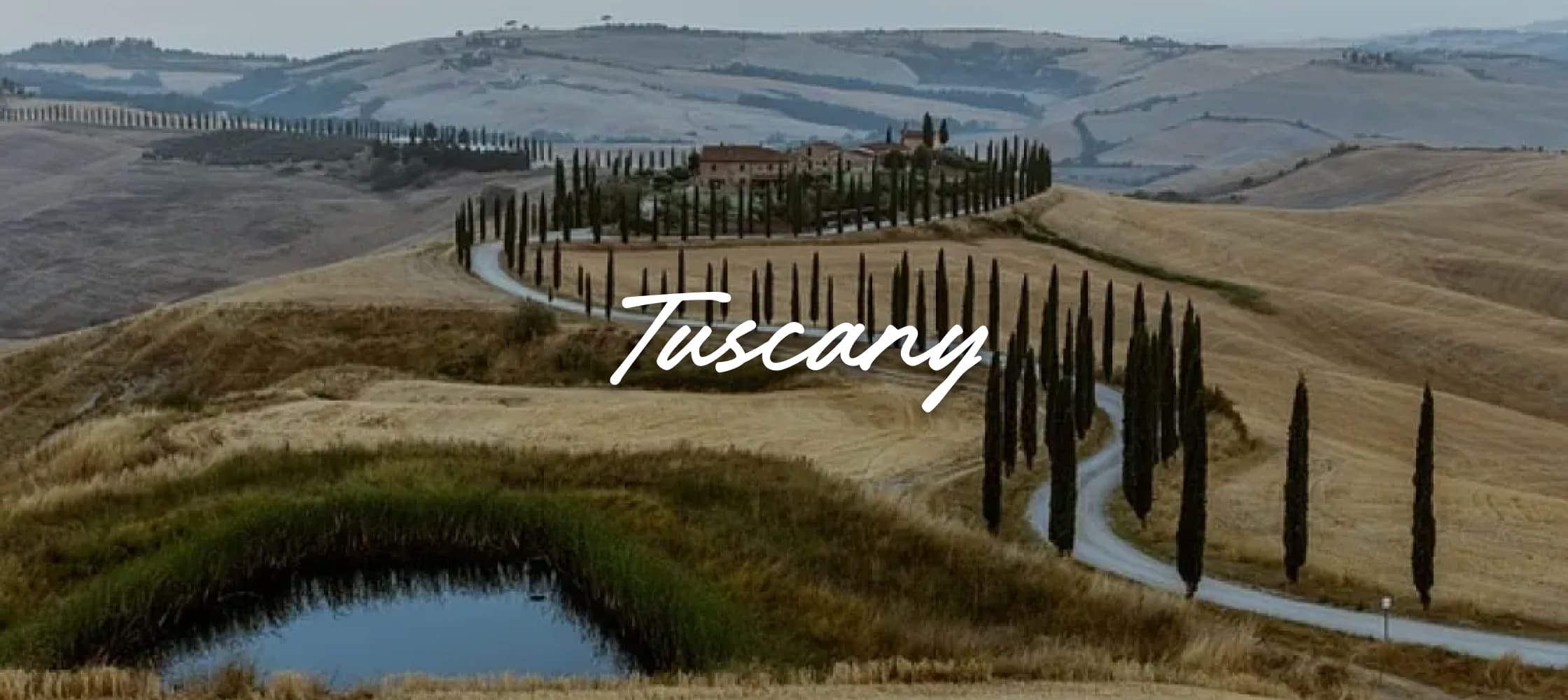
Leave Siena through Porta Pispini and within a few kilometres the city is only an outline behind you. The road climbs in spurts to Vagliagli, 505 m up among the Chianti vineyards, then swings home over Colle Pinzuto, a stretch of white dust the professionals race in the other direction during the Strade Bianche. That 34.5 km loop, one of the itineraries on Visit Tuscany, the region's tourism website, holds most of what makes cycling in Tuscany special: short, sharp climbs, gravel you will talk about at dinner, and a hilltop village with a view over the vineyards.
Where is the best cycling in Tuscany?
The best cycling in Tuscany sits around Siena. Chianti's paved hill roads begin at the city's edge, and the gravel of the Crete Senesi and the Val d'Orcia spreads south. L'Eroica and the Strade Bianche race made all three areas famous, and Visit Tuscany notes that some of their routes are permanent and signposted, so you can ride them all year.
Ride Chianti on paved roads
Road riders should start with the Grand Tour of the Chianti Senese, a 106 km loop from Castelnuovo Berardenga through Castellina in Chianti, Radda in Chianti and Gaiole in Chianti. It runs entirely on paved, well kept roads with little traffic, past vineyards, olive groves and castles. Visit Tuscany rates the effort very challenging in one go, so a fit group can ride it in a day, while a couple on a slower week can take it in small doses, with a stop for bean soup and red wine.
Take the gravel south into the Val d'Orcia
South of Siena, the Eroica Montalcino itinerary loops 153 km and 3,073 m of climbing from the fortress in Montalcino, about half of it on gravel. It passes San Quirico d'Orcia, the hot water square of Bagno Vignoni, Pienza, a lonely dirt climb to 564 m towards Montisi, Buonconvento and the Abbey of Sant'Antimo. In one day it is for well trained riders; split over two or more days, with nights in Pienza, Trequanda, San Giovanni d'Asso or Buonconvento, it suits less experienced riders too.
Head further afield
Beyond Siena, Visit Tuscany points road riders to the vineyard roads between Bolgheri and Castagneto Carducci, on towards Sassetta and Suvereto, and to the Mugello hills as a training ground. The 172 km Val di Merse Grand Tour passes the roofless San Galgano Abbey, with bike hotels in Casole d'Elsa for a night on the way. Climbers head for Monte Amiata in the far south. First timers can ride the Sentiero della Bonifica, a traffic free cycleway. For more rides like these across Europe, read our guide to 7 cycling routes in Europe for every level.
Road or gravel: which bike suits the strade bianche?
The strade bianche are Tuscany's white roads: unpaved lanes of compact earth and gravel that link farms and villages across the Siena hills. On the Gran Fondo Strade Bianche route, the amateur ride on the pro race's roads, the strade bianche make up 42.6 km of 137.7 km, or about 30 per cent, in 10 sections. The organiser describes the surface as well maintained, but some sections are coarse grained or muddy, and the ramps are steep: 15 per cent on Colle Pinzuto and 18 per cent on the climb to Le Tolfe. The terrain is unpredictable after rain, so the gravel that rolls fast in a dry September can turn slick in a wet May. The climbs are rarely long, only frequent, which rewards low gears and steady pacing. A road bike handles the paved Chianti loops; a gravel bike is the choice for the Val d'Orcia and Siena loops that Visit Tuscany lists for gravel.
Riders who want both in one week should bring a gravel bike: it rides the paved Chianti loops as well as the white roads. The permanent route of L'Eroica takes any type of bike, according to Visit Tuscany, so nobody is shut out of the white roads by their kit.

How do you ride L'Eroica and the Strade Bianche routes?
You ride the two events by entering them, or you ride their roads on any other day. L'Eroica starts in Gaiole in Chianti and the Gran Fondo Strade Bianche in Siena, a short ride apart.
Turn back the clock at L'Eroica
L'Eroica was born in 1997 in Gaiole in Chianti, when its creator Giancarlo Brocci set out with 92 riders. Visit Tuscany says it began as a way to keep Tuscany's dirt roads from being paved over. Riders come on vintage bikes in retro clothing, on the first Sunday in October; the 2026 edition ran on 3 and 4 October. The organiser's five routes are:
- Valle del Chianti: 45.1 km and 755 m of climbing, about 3 hours, with views from Brolio Castle
- Gallo Nero: 80.7 km and 1,612 m, about 4 hours
- Val d'Arbia: 106.3 km and 1,795 m, through the Crete Senesi
- Crete Senesi: 132.5 km and 2,327 m, a ride that can stretch to 10 to 12 hours or more
- L'Eroico: 210.9 km and 3,873 m, an average 15 hour ride with starts from 04.30
Outside the event, the permanent route runs 207 km with 3,380 m of climbing. Visit Tuscany says you can ride it at any time of year, on one or more days, on any bike. That makes it the best way to sample the event's roads with a group of friends on your own schedule.
Chase the pros on Strade Bianche
The Gran Fondo Strade Bianche is run by RCS Sports & Events and RCS Active Team. According to its rider FAQ, the 2027 edition is on Sunday 7 March, from the Medici fortress in Siena to Piazza del Campo, over 87 km or 137.7 km. The finish climbs Via Santa Caterina at up to 16 per cent, about 500 m from the line. Registration opened on 7 September 2026 and closes on 12 February 2027 or when the field is full. The route page offers GPX and KML tracks under its Download menu, so you can ride the sections on a quiet weekday.
When is the best time for cycling in Tuscany?
The best months for cycling in Tuscany are April and May, then September and October. April averages a high of 18.3 °C and September 25.8 °C, warm enough for short sleeves without the heat of high summer. July and August both average highs of 31.7 °C, so summer rides start at dawn and finish by lunch. May is the wettest month, with 13 wet days, worth knowing before a gravel week. March, the month of the Gran Fondo Strade Bianche, averages 14.5 °C, so pack a jacket and arm warmers. The table below shows theKlub's month by month climate data for Tuscany: average highs and lows, and the days with rain or snow.
| Month | High | Low | Rain or snow days |
|---|---|---|---|
| January | 10.0 °C | 1.8 °C | 8.8 |
| February | 12.3 °C | 2.9 °C | 9.2 |
| March | 14.5 °C | 4.2 °C | 9.4 |
| April | 18.3 °C | 6.9 °C | 9.5 |
| May | 21.8 °C | 11.0 °C | 13.0 |
| June | 28.4 °C | 16.0 °C | 7.0 |
| July | 31.7 °C | 18.6 °C | 5.2 |
| August | 31.7 °C | 18.7 °C | 6.1 |
| September | 25.8 °C | 14.7 °C | 8.3 |
| October | 20.7 °C | 11.0 °C | 8.4 |
| November | 14.6 °C | 6.4 °C | 12.0 |
| December | 11.0 °C | 3.0 °C | 10.4 |
Event weekends bring crowds, above all L'Eroica in October, which fills the roads around Gaiole in Chianti. The Tuscany Trail in May is a non competitive alternative. Quieter months mean emptier roads, though some services may be limited.
Pick your base: Siena, Chianti or the Val d'Orcia
Pick Siena if you want the most riding from one door. The Gran Fondo Strade Bianche reaches its first gravel 20 km out of the city, the Chianti loop to Vagliagli leaves from Porta Pispini, and evenings come with a whole city to walk. Borgo Grondaie is rated 9.2 out of 10 from 2,185 reviews. Hotel Certosa di Maggiano scores 10.0 from 1,387 reviews, and the Residenza d'Epoca Palazzo Borghesi sits in the city as well.
Road riders who want vineyards from the first pedal stroke should stay in Chianti. Locanda Le Piazze in Castellina in Chianti is rated 9.6 out of 10, and Hotel Le Fontanelle in Castelnuovo Berardenga sits at the start of the Grand Tour loop. For the Val d'Orcia, Visit Tuscany suggests breaking the gravel loop with nights in Pienza or Buonconvento. Compare every stay we rate on our Tuscany cycling page.

Should you hire a bike in Tuscany or bring your own?
Hiring a bike in Tuscany is usually the easier choice, above all for riders new to the roads. Check the frame size and the components before you book, and pack your own pedals and saddle so the hire bike feels like yours. If you bring your own bike, have it serviced before you travel. Riders with a specific bike fit, or a big climbing week planned, should bring their own bike. L'Eroica hires out restored vintage bikes that meet its rules to riders who have registered.
Whatever you ride, carry food. Water stops can be few on longer routes, and your usual bars and gels may be hard to find locally, so pack them and eat before the steep climbs.
Frequently asked questions
Is cycling in Tuscany suitable for beginners?
Yes, if you pick the right roads. The Sentiero della Bonifica is a traffic free cycleway, and the rolling Val d'Orcia suits newer riders on short days. L'Eroica's Valle del Chianti route is 45.1 km and takes about 3 hours. Save Monte Amiata and the full gravel loops for when you have the fitness and experience.
How steep are the climbs in Tuscany?
Most Tuscan climbs are short but steep. On the Gran Fondo Strade Bianche route, Colle Pinzuto reaches 15 per cent on gravel and the climb to Le Tolfe 18 per cent, and Via Santa Caterina into Siena hits 16 per cent. Monte Sante Marie has demanding ramps, and Monte Amiata in the far south has steep ascents of its own.
Do you need a medical certificate for the Gran Fondo Strade Bianche?
Yes. Every rider needs a medical certificate for competitive cycling, signed and stamped by a doctor and valid on race day. Licensed foreign amateurs bring a 2027 UCI licence; riders without a club or licence buy a one day licence from the Italian Cycling Federation (FCI). Upload the documents to your registration by 12 February 2027.
Is it safe to ride on Tuscany's roads?
Tuscan drivers are used to sharing the road with cyclists, and routes such as the Grand Tour of the Chianti Senese keep to low traffic roads. Learn the local traffic patterns, take extra care on gravel after rain, and ride gravel descents such as Colle Pinzuto with caution.
Tuscany rewards the rider who plans a little: the right month, a bike that suits the white roads, and a base that puts the riding out of the front door. A gravel week out of Siena in late September, or a spring road week in Chianti, will give you the steep ramps, the long views and the cafe stops this region is known for. For rides beyond Tuscany, browse our cycling holidays with theKlub. Start by picking your month from the climate table above.