In short
Skiing in Austria works for every level. Big linked circuits such as Ski Arlberg, with 300 km of groomed pistes, suit confident groups; small areas with gentle blue runs suit beginners and returning skiers; high resorts and glaciers hold their snow longest. Late January to March brings the best balance of reliable snow and quieter pistes.
In Kitzbühel, the Streif comes down the Hahnenkamm and finishes in the town centre. In Kühtai, many of the 51 km of pistes run to the hotel door. In the Gastein Valley, the day ends in a thermal spa at Bad Hofgastein or Bad Gastein. Austrian skiing is built around villages, mountain huts that serve Kaiserschmarrn and railway stations in the resorts themselves. The hard part is the choice. The country has 435 ski resorts, and the right one depends on how well you ski, who comes with you and which week you can get away.
Where to stay
Ski hotels in Austria
Hotels we picked for the sport: the right location, and the facilities an active stay needs.


Where are the biggest ski areas in Austria?
Ski Arlberg is the biggest, with 300 km of groomed pistes, ahead of the SkiWelt Wilder Kaiser-Brixental at 275 km and the Skicircus at 270 km. These linked circuits suit confident skiers and groups who want a different run every day, and two passes go further still, joining several valleys on one ticket.
Which linked circuits give you the most kilometres?
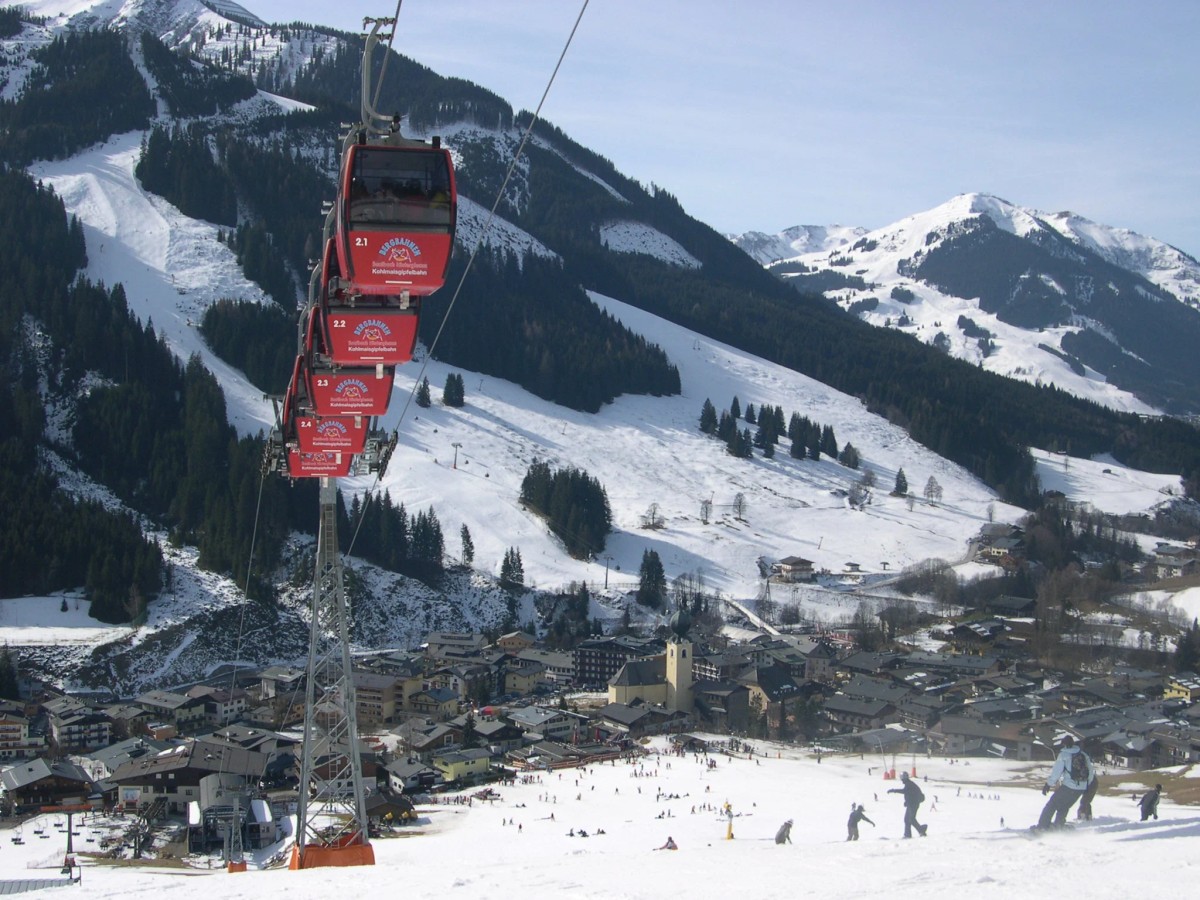
Ski Arlberg links St. Anton, Lech-Zürs and Warth-Schröcken with 85 lifts between 1,450 and 2,811 m, and adds more than 200 km of off-piste terrain for strong skiers. The SkiWelt spreads over eight villages, among them Söll, Ellmau, Brixen im Thale and Westendorf, with 81 lifts and 10 km of floodlit pistes for night skiing. The Skicircus joins Saalbach, Hinterglemm, Leogang and Fieberbrunn: 70 lifts between 840 and 2,096 m and around 60 huts. Fieberbrunn adds a freeride area with designated parks and secured routes. Ischgl's Silvretta Arena crosses the border to Samnaun in Switzerland, with 239 km of pistes up to 2,872 m. Kitzbühel has 181 km between the Kitzbüheler Horn and the Hahnenkamm. Our guide to skiing in Kitzbühel goes area by area, and the Saalbach-Hinterglemm ski guide does the same for the Skicircus.
Can one ski pass cover several valleys?
Yes, and two passes cover more ground than any single circuit. Ski amadé puts up to 760 km of pistes and 260 lifts on one pass. Its five regions are the 12 Peaks Ski Region around Flachau, Wagrain and Zauchensee, Schladming-Dachstein, Gastein, Hochkönig and Grossarltal. Schladming-Dachstein alone has 230 km over seven mountains, and its 4-Mountain Ski Circuit links Hauser Kaibling, Planai, Hochwurzen and Reiteralm into 123 km. In Tirol, the Zillertal Superskipass covers 546 km and 180 lifts in four areas: Hochzillertal-Hochfügen-Spieljoch, the Zillertal Arena, Mayrhofen's mountains and the Ski & Glacier World Zillertal 3000. It runs for 1 to 21 days, and the valley's ski buses and most of its public transport come with it. A pass like this suits a group with mixed ambitions. The strong skiers take the bus to a new mountain each morning; the rest stay on the slopes nearest the hotel.
Where should beginners and returning skiers go?
Beginners and returning skiers do best in a small, manageable area with lessons at a ski school. Look for mostly blue runs (the easy grade) and a few reds at most (the intermediate grade). A compact area is easier to find your way around than a vast network, and nobody needs to study a piste map for long.
Which small areas make a first week easy?
Almenwelt Lofer, in SalzburgerLand's Saalachtal, has 46 km of gentle pistes on 10 lifts. St. Johann in Tirol keeps things relaxed with 40 km and 10 lifts, topping out at 1,604 m. In Carinthia, the high plateau of Turracher Höhe sits at 2,200 m with 42 km of mostly easy, snow-reliable pistes on 16 lifts. Brandnertal in Vorarlberg has 64 km, three valley runs and a public conveyor belt, the moving carpet that carries beginners up a practice slope. For a weekend from Vienna, Semmering Hirschenkogel is an hour away, with 14 km, floodlit slopes and courses for returning skiers. Even Kitzbühel has ten practice lifts in the valley. Old skis make a comeback harder, and most resorts rent the latest models. Bringing your own? Have a specialist shop check the binding settings first, on an electronic device and with an honest account of how well you ski.
Where do families find their ski legs?
Families who want room to grow should look at the areas with the most blue runs. That means 140 km in the Skicircus, 114 km in the SkiWelt Wilder Kaiser-Brixental and 61 km in Obertauern. Inside the SkiWelt, Ellmau has its own little hill, shared with neighbouring Going, where gentle slopes are served by parallel ski tows and the après-ski stays quiet. Serfaus-Fiss-Ladis has three areas reserved for children and two ski schools that specialise in teaching them, with more than 700 instructors between them. An underground train with four stops carries skiers from the village centre to the cable cars. The Zillertal Arena, another big area that suits families, has 150 km, 52 lifts and a 700 m funpark. Hochzeiger in the Pitztal is smaller, with 54 km on 9 lifts up to 2,500 m and sunny huts for the breaks.
No hosted skiing trip in Austria yet. Want to hear first when there is one?
No password. We email you a 6-digit code.
Which Austrian resorts hold their snow longest?
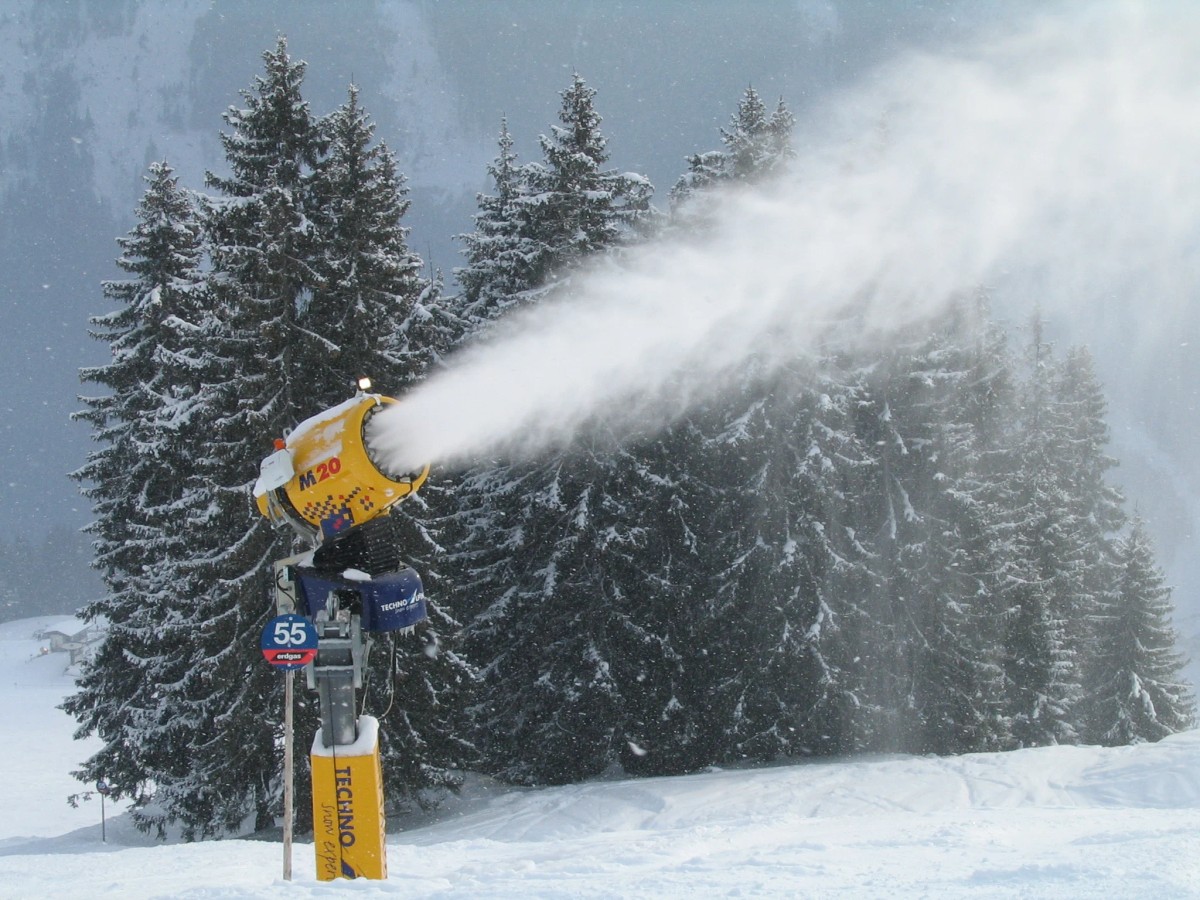
The highest resorts and the glaciers hold their snow longest in Austria, because altitude decides the length of the season. A ski area counts as snow-reliable when, in seven winters out of ten, it has enough snow cover to ski on at least 100 days. That benchmark favours height. The glacier areas have the longest seasons: on the Hintertux Glacier in the Zillertal, skiing is possible all year round, conditions permitting. Sölden reaches 3,340 m with two glaciers and skiing from autumn into spring. Gurgl, at the head of the Ötztal, has its village above 1,800 m and lifts to 3,080 m, with a season from November to April. Obertauern, nicknamed the snow bowl, runs from November to May, and Ischgl's Silvretta Arena, up to 2,872 m, holds snow into May too. Ski Arlberg averages nine metres of natural snowfall a season. Snowmaking adds to the natural snow, but height keeps a season long. For a week in December or April, book high.
What month is best to ski in Austria?
Late January to March is the best time to ski in Austria for reliable snow on quieter pistes. January and February are known for good snow, and March can bring days of sun on the slopes. Most ski areas open between late November and mid December, often with only some lifts and pistes running at first. Snow-sure areas generally run from December into April and some glaciers open in autumn. Ischgl starts its season with the Top of the Mountain Opening Concert at the end of November. December to March is the peak of winter, Christmas markets included, and in January the Filzmoos hot air balloon festival fills the evenings with music and fireworks.
The table shows the average daily high and low and the days with rain or snow in each month from 2016 to 2025. It is measured at a single point in the middle of Austria, not on a mountain, so read it for the weather, not for snow depth. February has the fewest days with rain or snow of the winter months, 12.9, and January the coldest nights, with an average low of -10.0°C.
| Month | High | Low | Rain or snow days |
|---|---|---|---|
| January | 1.0 °C | -10.0 °C | 15.0 |
| February | 3.8 °C | -7.2 °C | 12.9 |
| March | 6.1 °C | -5.0 °C | 14.7 |
| April | 9.9 °C | -1.9 °C | 15.8 |
| May | 13.6 °C | 2.2 °C | 21.7 |
| June | 19.6 °C | 7.5 °C | 19.6 |
| July | 20.0 °C | 8.9 °C | 21.7 |
| August | 20.4 °C | 8.9 °C | 18.5 |
| September | 16.5 °C | 4.9 °C | 15.7 |
| October | 12.7 °C | 1.5 °C | 12.2 |
| November | 6.4 °C | -4.4 °C | 12.2 |
| December | 2.6 °C | -7.8 °C | 14.1 |
Book a base that fits the area and the journey
Choose the area first, then a base close to its lifts. Several resorts have a railway station in the village: Kitzbühel, Schladming, Zell am See, St Anton am Arlberg and the Gastein Valley among them. Elsewhere, a bus, ski bus or shuttle covers the last leg. Some regions include those ski buses with the ski pass or the guest card.
Where should you stay in Tirol?
Kitzbühel is easy to reach by train. Leave London St Pancras at 15:04 and change at Brussels and Cologne for the NightJet sleeper. An onward train from Wörgl reaches Kitzbühel at 09:28 the next morning, every day of the week. Stay at Alpenhotel Kitzbühel am Schwarzsee, rated 9.3 out of 10 from 140 reviews, or Hotel Edelweiss Kitzbühel, a 3-star rated 9.6 from 306. For snow that lasts, die berge lifestyle-hotel Sölden rates 9.2 from 1,481 reviews in a resort where two glaciers keep skiing going from autumn into spring. Alpvita Piz Tasna in Ischgl suits a late-season week in the Silvretta Arena. In the Zillertal, Alpinhotel Berghaus spa in Tux (9.8 from 40 reviews) and Boutique Hotel Haidachhof superior in Fügen (9.7 from 35) both sit inside the Superskipass valley. The ski buses carry you between its four areas.
Where should you stay in SalzburgerLand and Styria?
For the Skicircus, Hotel Das Kohlmais in Saalbach Hinterglemm takes its name from the Kohlmaisbahn lift it stands beside, and rates 9.6 from 184 reviews. In Ski amadé, Sporthotel Wagrain (9.4 from 116) is a base for the 12 Peaks Ski Region. In Schladming, das bleibt Alpine Suites (9.7 from 105) puts you in a town with its own railway station, the 4-Mountain Ski Circuit and the annual night slalom of the Alpine Ski World Cup. The Gastein Valley, also on the railway, adds 180 km of pistes across three ski areas and two thermal spas for tired legs. By train, the NightJet from Brussels or Paris reaches Salzburg at 07:26 after leaving on a Monday, Wednesday or Friday, and trains run on to the resorts. To set every hotel we rate side by side for your dates, compare stays on our Austria ski page.
Frequently asked questions
Does Austria have good skiing?
Yes. Austria has 435 ski resorts, and Ski Arlberg, the largest, has 300 km of groomed pistes and 85 lifts. High areas such as Sölden, Gurgl and the Hintertux Glacier hold their snow into spring, and small, gentle areas such as Almenwelt Lofer and St. Johann in Tirol suit a first week on skis.
Can you ski in Austria in summer?
On a glacier, yes. Skiing is possible all year round on the Hintertux Glacier in the Zillertal, conditions permitting, and the glacier areas have the longest seasons in the country. Some glaciers also open in autumn, well before most Austrian ski areas start their season between late November and mid December.
Do you have to wear a helmet to ski in Austria?
A ski helmet is mandatory for children up to the age of 15 and recommended for every other skier and snowboarder. The piste rules matter as much: the skier ahead has priority, so keep your speed within your ability, avoid stopping in narrow sections and clear the piste quickly after a fall.
What number do you call for mountain rescue in Austria?
Call 140, the Austrian Alpine emergency number, for an accident beyond a secured ski area. The piste rescue service or the control centre decides whether a helicopter flies, usually for serious injuries or incidents in open ski terrain. Health insurance covers only a small share of a helicopter rescue, and the injured skier carries the rest.
Austria rewards a clear order of choices: how much skiing your group wants, how high it needs to be for your week, and only then the village. Get those right and the rest is hut lunches and the train home. Our page of ski holidays with theKlub brings together the resorts and stays we know for the sport. Start with your dates: put them into the Austria ski page and book a base near the lifts you want.