
In short
To ski Italy well, match the region to your group. The Dolomites suit families and intermediates who want gentle slopes and huge linked circuits. The Aosta Valley suits strong skiers chasing height and a long season. Sestriere and Livigno suit groups after mileage or freeride. Go in January after the holidays, or March for longer days.
Almost all of the sunny southern slopes of the Alps lie in Italy. That is the pull: a long red run under pale rock towers, lunch on a hut terrace in the sun, and a lift network so big that a week barely scratches it. Skiing in Italy rewards a little planning, because the right valley for a family of first-timers is the wrong one for a group of friends who want to ski hard from first lift to last.
Which Italian ski region suits you?
Italy has 284 ski resorts with 5,683 km of slopes and 1,868 lifts, according to the resort database skiresort.com, and 202 of those resorts sit in the Italian Alps. The Dolomites, spread across South Tyrol, Trentino and the Veneto, suit first-timers, families and intermediates who want to cover distance: wide, gentle slopes run beneath the rock towers, and the Dolomiti Superski pass links 12 ski resorts. The Aosta Valley in the north west suits strong skiers and anyone travelling early or late in the winter, with high ski areas under Mont Blanc, Monte Rosa and the Matterhorn and lifts that cross into France and Switzerland. The Vialattea above Turin suits groups of friends who want one huge linked area around Sestriere and Sauze d'Oulx. Livigno, in Lombardy, suits freeriders and anyone who wants to step from the door onto the snow. Further south, skiing on Etna, Italy's highest active volcano, can start with the first December snowfall.
Experts are not short of a challenge either. The Dolomites hold World Cup runs such as the Gran Risa, the Saslong and the Erta, and the Aosta Valley adds off-piste routes reached by lift or by helicopter. Our ski in Italy page gathers the places and handpicked hotels we know across these regions.

Ski the Dolomites: Superski, Sellaronda and World Cup runs
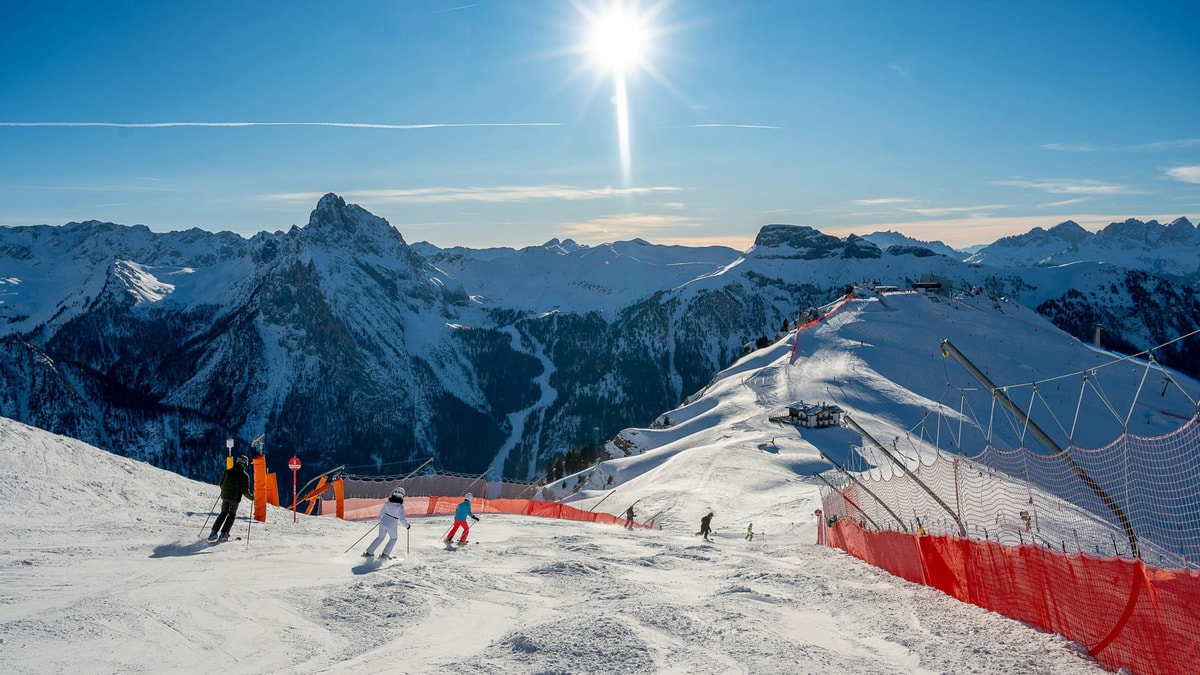
The Dolomites suit almost every level, and one pass covers most of them. Dolomiti Superski links 12 ski resorts with more than 1,200 km of slopes and 450 lifts, according to the regional portal dolomites.org. Alta Badia and Val Gardena both connect to the Sellaronda ski tour and more than 500 km of linked slopes, so a confident intermediate can ski a new valley most days.
Families and first-timers should start in Alta Badia or on Kronplatz. Alta Badia has 130 km of slopes and 53 lifts, with gentler pistes suited to novices and children. Kronplatz, also called Plan de Corones, can be reached from four sides, and most of its 125 km are easy slopes: 27 blue and 13 red, plus the famous Black Five. For a base, Hotel Rudolf in Brunico is one of the hotels we have handpicked for skiers.
Strong skiers come for the race pistes. The Audi FIS Ski World Cup comes to La Villa in Alta Badia each year, where the Gran Risa draws professional skiers, and races run in Val Gardena too. Val Gardena and the Alpe di Siusi, the Seiser Alm in German, share 175 km of slopes and 80 lifts. The descent from Boè has steep sections through dense forest.

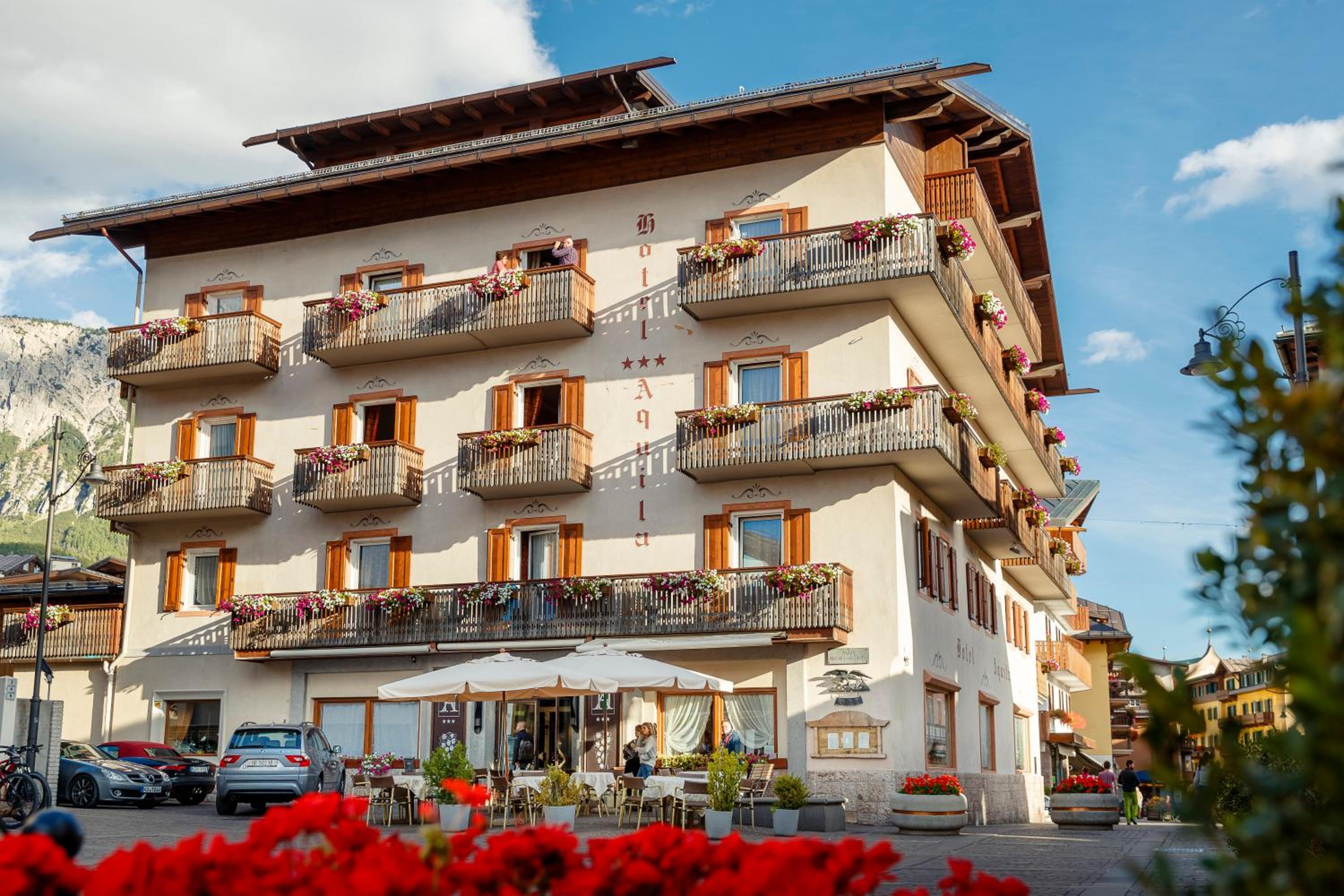
Cortina d'Ampezzo combines the Faloria, Cristallo and Mietres, Tofana and Lagazuoi areas into 120 km of slopes and 38 lifts; our guide to skiing Cortina d'Ampezzo picks its runs, lifts and best weeks.
Over in Trentino, skiresort.com rates Madonna di Campiglio, with Pinzolo, Folgàrida and Marilleva, the best ski resort in Italy at 4.7 out of 5 stars, level with Val Gardena. Its black Direttissima dello Spinale has snow banks and sudden changes in gradient, so ski it once you can control your speed on steep ground. Our hotels there include Hotel Garnì Caminetto, rated 9.6 out of 10 across 1,203 guest reviews, and Hotel Chalet Del Brenta, with Lefay Resort & SPA Dolomiti in Pinzolo, part of the same ski area.
Go high in the Aosta Valley: Cervinia, Courmayeur and Monterosa
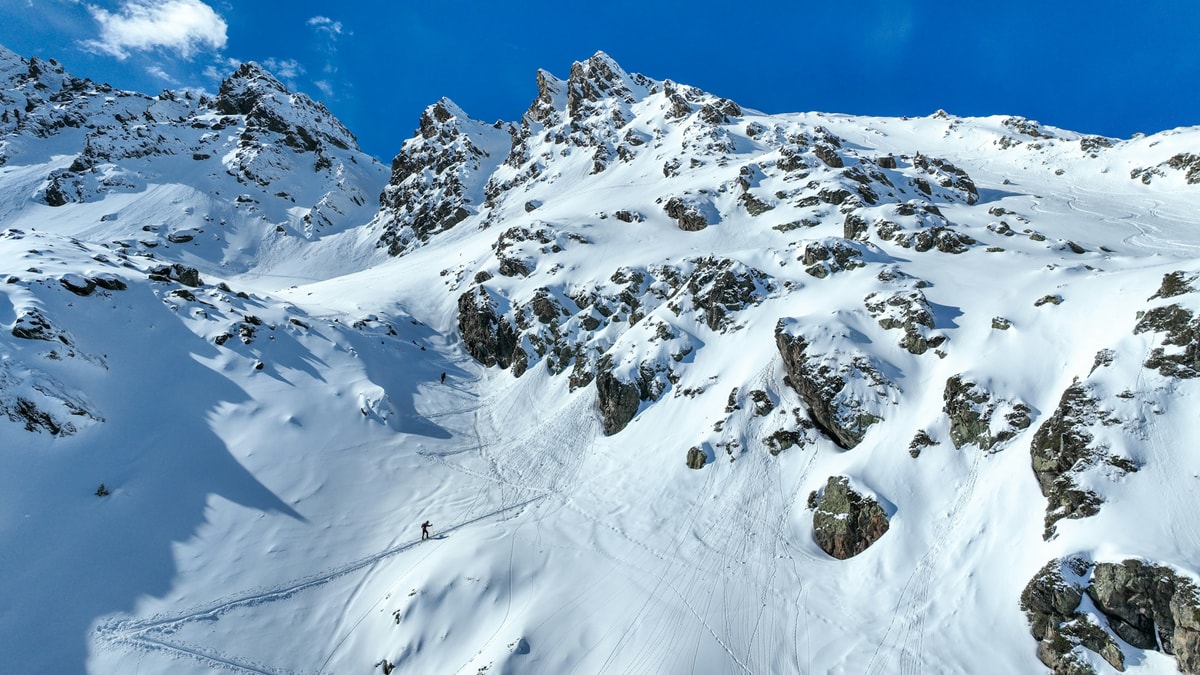
The Aosta Valley suits skiers who want height, long seasons and terrain beyond the pistes. The Aosta Valley tourist board lists 19 ski resorts with 800 km of runs and 8 snow parks, plus off-piste routes reached by lift or by helicopter from heli-skiing bases.
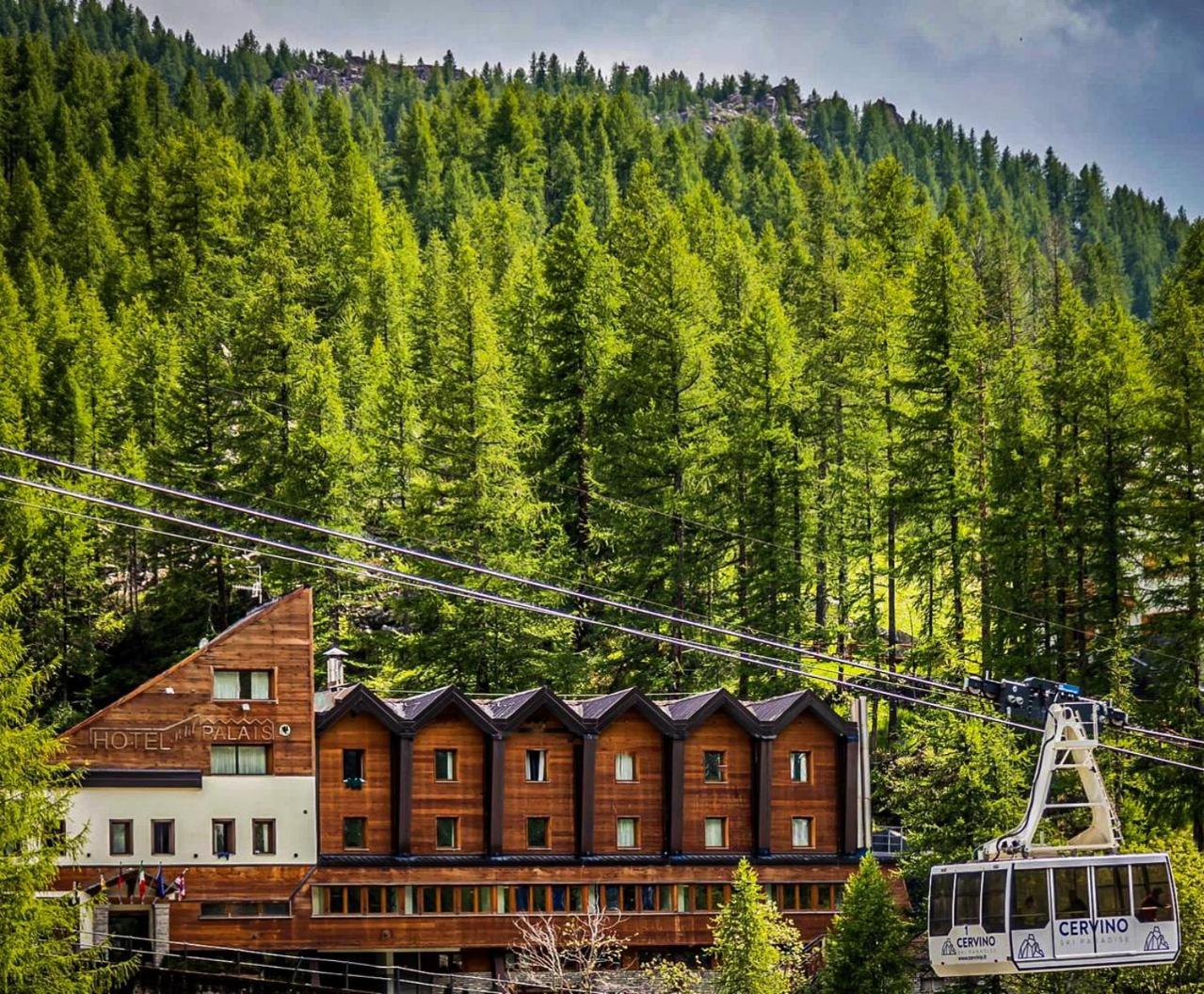
Breuil-Cervinia sits at the foot of the Matterhorn and shares its ski area with Zermatt in Switzerland, and the shared area reaches 3,899 m, the highest of any ski area skiresort.com lists for Italy. The lift company at Cervinia opens Breuil-Cervinia from 24 October 2026 to 2 May 2027, the longest winter season in this guide. A new gondola climbs from the village to Plateau Rosa in about 17 minutes. It suits skiers who want snow at both ends of the season and a day across the border.

Courmayeur and its Chécrouit and Val Vény slopes lie beneath the Mont Blanc chain. Auberge de La Maison in Courmayeur is rated 9.8 out of 10 by 234 guests. La Thuile, on the border with France, has 152 km of slopes with views of the Rutor glacier and Mont Blanc. Monterosa Ski stretches through 3 valleys at the foot of Monte Rosa, with Champoluc and Gressoney-La-Trinité its best known villages and great off-piste tracks for skiers who hire a mountain guide.
Families have quieter options. Pila overlooks the town of Aosta and is linked to it by a cable car, and Torgnon, Champorcher with 12 km of slopes and Crévacol with 20 km are smaller resorts the tourist board recommends for families.
Where do Sestriere, Sauze d'Oulx and Livigno fit in?
Sestriere and Sauze d'Oulx belong to the Vialattea, the Milky Way, in the Turin Alps. Italia.it, Italy's national tourism portal, calls it the second largest ski resort in Europe: 400 km of slopes, most covered by artificial snow, 78 lifts and skiing up to 2,800 m. It links seven Piedmont villages (Oulx, Cesana, Claviere, San Sicario, Sauze d'Oulx, Sestriere and Pragelato) with Montgenèvre in France.
Monte Fraiteve joins Sestriere with Sauze d'Oulx and Sansicario, explains Turismo Torino e Provincia, the Turin tourist board. The terrain ranges from the steep slopes of the Banchetta to the winding runs of Sansicario through larch forest, and the Sestriere and Sansicario slopes hosted races at the Torino 2006 Olympic Games. Four snow parks serve freestylers, and Baby Fun Parks keep young children busy. The Vialattea suits a group of friends of mixed ability who want new runs every day. Its lifts run from 5 December 2026 to 11 April 2027.
Livigno, in Lombardy, has 115 km of slopes: 12 black, 37 red and 29 blue runs across 100 km² of terrain on two sides of one valley. Many hotels and apartments sit on the slopes, so you can ski in and ski out, and free buses link the rest of the village. Freeriders get fresh snow that stays soft at altitude, and heliski days leave from helipads with a UIAGM mountain guide, the international mountain guide qualification. The season runs from 28 November 2026 to 2 May 2027. Lombardy's other big name is Bormio, and our guide to skiing Bormio plans a week on the Stelvio and Cima Bianca.

When is the best month to ski in Italy?
January after the holiday peak is the best month to ski in Italy for quieter slopes and firm snow, though the days are shorter. February brings the widest lift operation, but school holidays fill the slopes and the lunch huts. March gives longer days, more sunshine and easing crowds; ski early, while the higher snow is firm and before the lower slopes soften. December suits a festive week, but early snow is variable and full lift links are not guaranteed. April means high areas only, with a few glaciers open into spring.
Dates vary by area. Breuil-Cervinia runs from late October to early May, Livigno from late November to early May, and the Vialattea from early December to mid April. Etna can open with the first December snowfall and often carries on until May.
The table below is theKlub's climate data for Italy, from Open-Meteo for 2016 to 2025, measured at the one point we use for the whole country rather than on any mountain. Read it for the weather in the valleys and cities you travel through, never for snow on the slopes: its wet days count rain or snow.
| Month | High | Low | Rain or snow days |
|---|---|---|---|
| January | 10.6 °C | 1.7 °C | 10.2 |
| February | 13.1 °C | 2.8 °C | 9.7 |
| March | 15.3 °C | 4.3 °C | 11.3 |
| April | 19.1 °C | 7.0 °C | 10.0 |
| May | 22.6 °C | 11.1 °C | 13.1 |
| June | 29.2 °C | 15.9 °C | 6.4 |
| July | 32.6 °C | 18.6 °C | 3.1 |
| August | 32.4 °C | 18.7 °C | 4.3 |
| September | 26.5 °C | 14.8 °C | 8.8 |
| October | 21.5 °C | 10.9 °C | 9.9 |
| November | 15.5 °C | 6.8 °C | 12.5 |
| December | 11.7 °C | 3.0 °C | 10.0 |
Pack a helmet and plan the train before you go
Pack a certified ski helmet, whatever your age. Since 2022 helmets have been compulsory in Italy for skiers, snowboarders and sledgers under 18, and from winter 2025/26 the rule covers everyone on ski slopes, snow parks and sledging areas, as the Val Gardena tourist board sets out. On the piste, check the slope is clear before you set off, give way to skiers coming from the right at junctions unless signs say otherwise, and match your speed to your ability, the visibility, the weather and the traffic.
You can leave the car at home. For Pila, walk from Aosta railway station to the cable car. For Breuil-Cervinia, take the train to Châtillon/Saint-Vincent and the bus up the valley; buses also run from Turin and Milan. Cortina d'Ampezzo is a fast regional train from Belluno to Calalzo di Cadore without changing, then a bus to the resort. Pila and Cortina both rent skis on site, so you need not carry them, though if you ski your own boots or a favourite pair, bring them.
Frequently asked questions
Where is the best skiing in Italy?
It depends on how you ski. For sheer size, the Dolomiti Superski pass covers 12 resorts and more than 1,200 km of slopes. For height and a long season, Breuil-Cervinia and Zermatt reach 3,899 m. The resort database skiresort.com rates Madonna di Campiglio and Val Gardena the best in Italy, both at 4.7 out of 5 stars.
Can you ski from Italy into Switzerland or France?
Yes, in three places. Breuil-Cervinia shares its ski area with Zermatt in Switzerland. La Thuile's ski area in the Aosta Valley runs between Italy and France. The Vialattea links Sestriere, Sauze d'Oulx and five more Piedmont villages with Montgenèvre in France.
Is there skiing in southern Italy?
Yes. Skiresort.com counts 30 ski resorts in southern Italy and 7 on the islands, including 18 in Abruzzo, 4 in Calabria and 3 in Sicily. The best known is Etna, Italy's highest active volcano, where skiing can begin with the first December snowfall and often continues until May.
Does the Ikon Pass work in Italy?
Yes, in the Dolomites and the Aosta Valley. Dolomiti Superski is an Ikon Pass destination: the full Ikon Pass gives up to 7 days across its 12 resorts and the Ikon Base Pass up to 5, from 15 November to 15 April. The Aosta Valley has also joined the Ikon Pass network.
Italy rewards the skier who chooses the valley before the hotel. Families and new skiers will feel at home on the Dolomites' blue runs, groups chasing kilometres on the Vialattea or the Sellaronda, and strong skiers in the high Aosta Valley. For more places to ski, browse our ski holidays with theKlub. Pick your region, then check its lift calendar for your week before you book anything.